
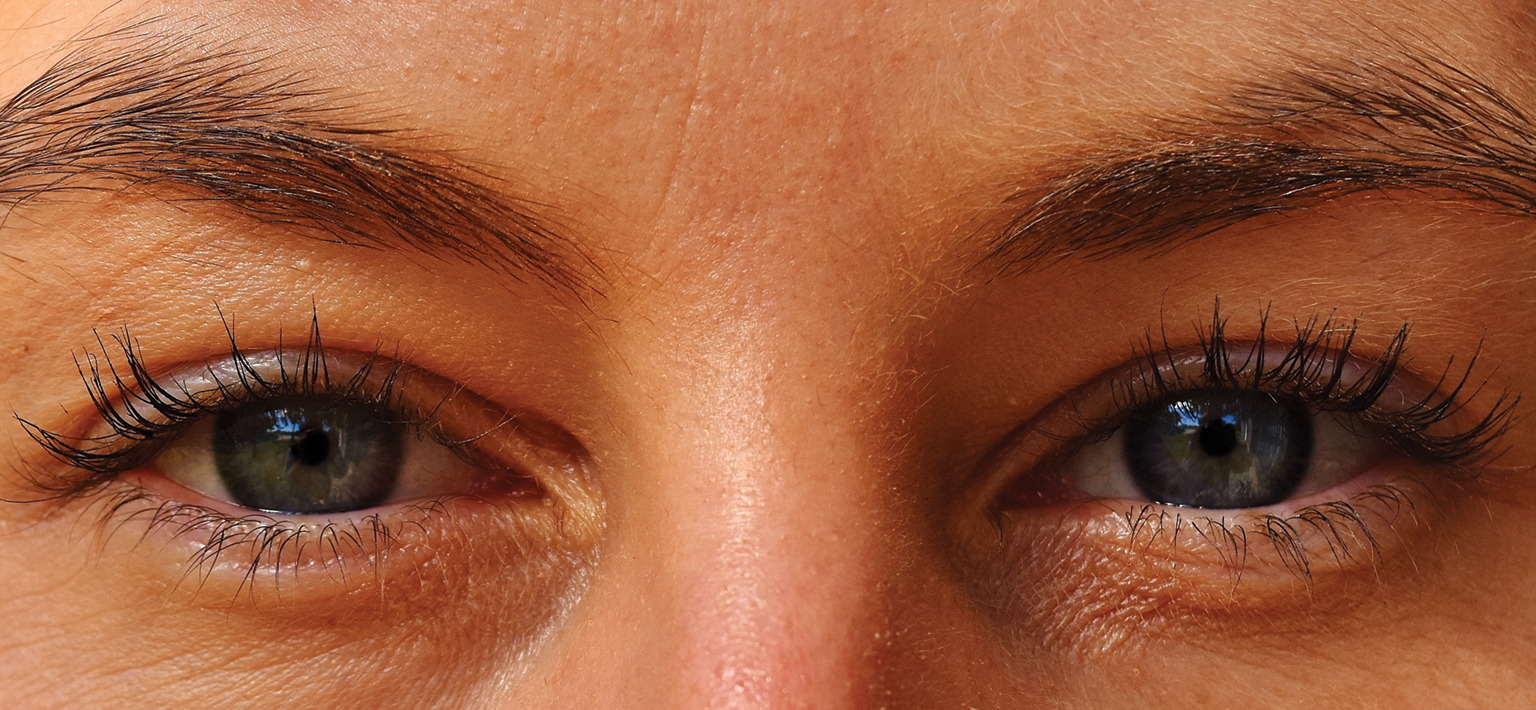
Natural Vision teacher Anna Bambridge reviews a new, multi-authored book*, to which she contributed, which covers the wide range of natural approaches to eye care and repair by practitioners who work with eyesight holistically
Eyesight is variable and a part of our overall health and well-being. In a world where any sight challenge is usually responded to by a visit to the optician and a pair of glasses, this simple statement is controversial and opens up a whole new world of seeing.
Natural eyesight care, the Bates Method, vision education, eyesight training, vision coaching, holistic vision awareness, whatever the names attached to this work and whichever different approach is used, the premise is the same: eyesight quality is flexible and it is worthwhile paying attention to that flexibility.
Most contemporary, natural eyesight care has its roots in the work of Dr William H Bates, a New York ophthalmologist who lived from 1860 to 1931. Dr Bates was dissatisfied with conventional practice. He did not find the fitting of glasses satisfactory because they did not seem to cure his patients, only make them worse. So, he began his own research and noticed that sometimes patients with a refractive error (eg. short or long sight) seemed to spontaneously change for the better, sometimes to the point of a complete reversal of symptoms.
This led him to question the assumptions of his field. He noticed that eyesight could heal when the wisdom of the time said it could not. He found that eyesight can worsen and improve, that problems are related to strain and that eyesight is an indicator of mental, emotional and physical health.
Many people have asked me what I call my treatment. The question is a very embarrassing one because I really have no name to give it, unless I can say that my methods are the methods employed by the normal eye – Dr William Bates
Although he received opposition for his work Bates continued teaching his findings. His work has been passed through the generations and my education as a natural vision teacher is part of this lineage. As a vision teacher I am also part of a global network of people working in and developing this field. In October in Valencia, Spain, the 29th International Conference of Holistic Vision took place, where over 200 teachers and students met to share and learn. Although not wholly mainstream, the Holistic Vision community is alive and well.
This network of teachers, growing in number and confidence, has produced a book anthology bringing together many different approaches to eyesight challenges. A New World of Seeing*, edited by Ainhoa de Federico, Orit Kruglanski and Nathan Oxenfeld, was published in December, 2024, and brings together 43 authors, all of them experienced vision teachers, writing about different aspects of their work. It is a snapshot of the field of vision education. There are chapters about the history and development of natural eyesight care, about current practice, about the links to other healing modalities and visions for the future.
Meir Schneider’s School for Self-Healing
One of the chapters is by the founder of the School for Self-Healing, Meir Schneider. His books have touched thousands with his empowering work, teaching people to move into wellness. His eyesight has always been central to his healing vision.
‘I was born blind to deaf parents. It took until my teenage years to learn that I could develop sight with the help of the Bates Method and other great teachings, and learning to see shaped the course of my entire self-healing method. And, of course, my life.’
Through a touching case study of a child he worked with, we are shown that how we classify blindness fails to capture the whole picture and suggests that serious illness can improve. It also demonstrates how important a supportive environment is for self-healing. His chapter finishes with a reminder that we are all different and that each of us will learn to relax and see in a different way and needs to find our own path with the work.
‘Your story will be different from mine… Accept your situation, go step by step with diligence and you will see better. Ask anyone in the Bates community.’
Meir Schneider’s mention of acceptance is an important principle, which leads to the connection between mind and vision. Another chapter is by Gülay Çil, who writes from her perspective as both a vision and Tai Chi teacher. She deftly gives insights and suggests practices to illustrate her deep understanding of the connection between the ancient philosophy of Tai Chi and the Bates Method.
‘What inspired the founder of Natural Vision Improvement, Dr W H Bates, one hundred years ago also inspired the legendary founders of Tai Chi Chuan thousands of years prior: Nature.
‘When you seek for clarity it certainly doesn’t come. When you try harder your vision most probably gets worse. Wei wu wei is about relaxing the body and mind and accepting clarity when it comes. It is about opening the doors and being ready for it. You cannot force clarity; it is a totally receptive process.’
Read the complete article in issue 115.